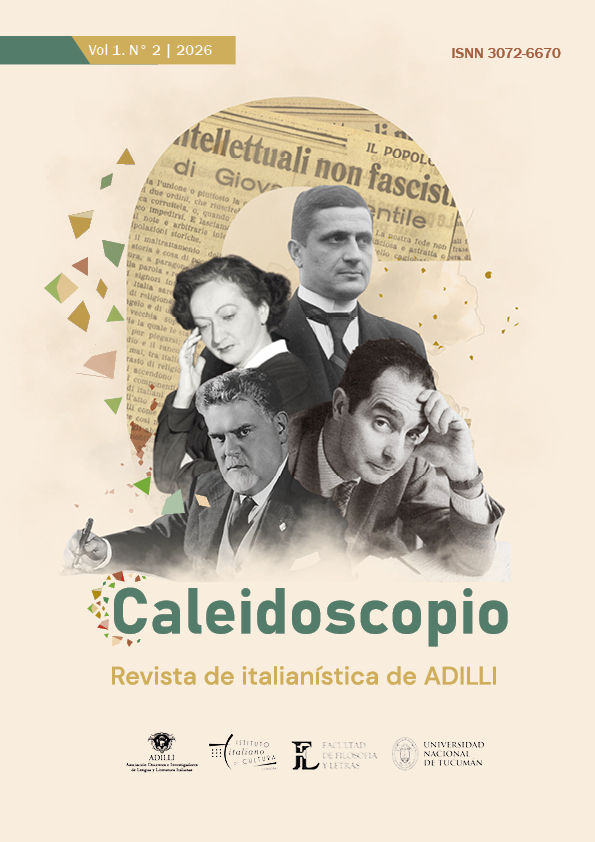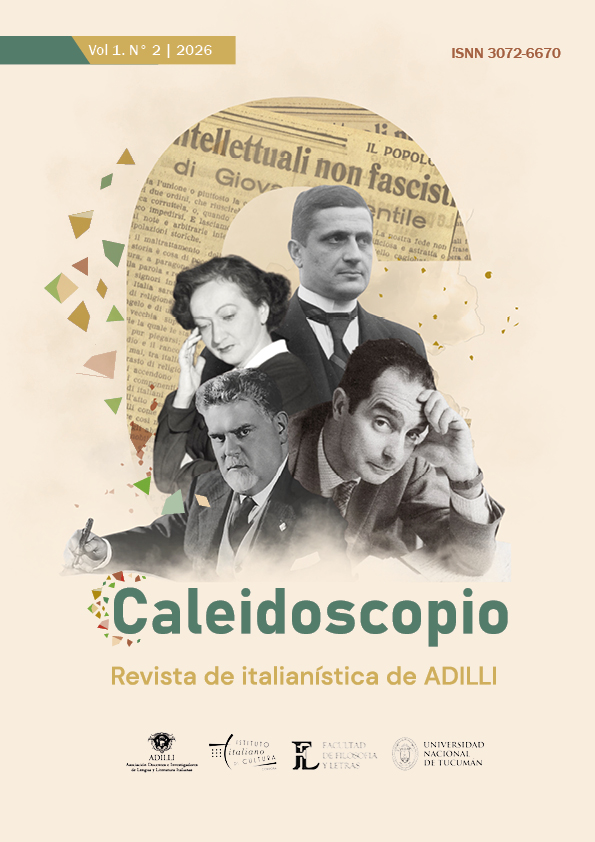
Un intelectual en el exilio: Mondolfo en la Universidad Nacional de Tucumán
Keywords:
exile, university, praxis, Faculty of Philosophy and Letters of the UNT, philosophyAbstract
Rodolfo Mondolfo, a renowned professor at the University of Bologna, was one of the signatories of the Anti-Fascist Manifesto. Racial laws excluded him from his position in 1938, leading to his decision to go into exile in Argentina. This article highlights two aspects of the period following that date: first, his exile, facilitated by the efforts of the Italian community and his integration into Argentine universities; second, the particular conditions of his presence at the Faculty of Philosophy and Letters of the National University of Tucumán. We highlight two conditions of his teaching in Tucumán: 1. Mondolfo had already been reinstated in his position at the University of Bologna, but he had decided not to return to live in Italy. 2. The Faculty of Philosophy and Letters at the UNT has not yet celebrated its tenth anniversary since its institutionalization, while the Italian scholar is already 71 years old. These conditions make his outlook on the university and university policy, his considerations on the history of philosophy and action, as well as the rigor of his teaching and intellectual output—notwithstanding his exile—founding features of the nascent faculty.
Downloads
References
Agamben, G. (2006). Homo Sacer. El poder soberano y la nuda vida. Pre-Textos.
Avni, H. (1983). Argentina y la historia de la inmigración judía (1810-1950). AMIA Comunidad de Buenos Aires: Editorial Universitaria Magnes, Universidad Hebrea de Jerusalén.
Balzi, C., De Santis, G. y Folco, G. (comp.). (2007). Entre la antigüedad clásica y la modernidad europea. Rodolfo Mondolfo. Diálogo entre dos momentos fundantes de la cultura de Occidente. Del Copista, Instituto Italiano de Córdoba.
Cattarulla, C. (2021). “Augusta Algranati Mondolfo” in Guarnieri, P. Intellectuals Displaced from Fascist Italy. Migrants, Exiles and Refugees Fleeing for Political and Racial Reasons, Firenze University Press. 2nd. Ed. revised and enlarged (1st ed. 2019-2022). https://intellettualinfuga.com/in
Cassigoli, A. (1976). Antología del fascismo italiano. UNAM.
Croce, B. (1925), Il Manifesto degli intellecttualli antifascisti, Il Mondo.
Croce, B. (1925). La replica degli intellettualli non fascisti al manifesto de Giovanni Gentile, Il Popolo. https://www.ousia.it/SitoOusia/SitoOusia/TestiDiFilosofia/TestiPDF/Croce/Manifesto.pdf.
De Libera, A. (2007), Archéologie du sujet. Naissance du sujet. Vrin.
Estudios de Historia de la Filosofía. En homenaje al Prof. Rodolfo Mondolfo. (1962) Facultad de Filosofía y Letras de la UNT.
Foucault, M. (2006). La hermenéutica del sujeto. F.C.E.
Gentile, G. (21 aprile 1925). Manifesto degli intellettuali del fascismo agli intellettuali di tutte le nazioni.
Mondolfo, R. (1942). En los orígenes de la filosofía de la cultura. Imán.
Mondolfo, R. (1949). Problemas y métodos de investigación en la historia de la filosofía. Cuadernos de Filosofía.
Mondolfo, R. (1952). El infinito en el pensamiento de la Antigüedad Clásica. Imán.
Universidad Nacional de Tucuman. (1962). “La filosofía como problematicidad y el historicismo”, en Estudios de Historia de la Filosofía. (pp. 721-736). Facultad de Filosofía y Letras de la UNT.
Mondolfo, R. (1978). La comprensión del sujeto en el mundo antiguo. EUDEBA.
Petriella, D. (1979) Los italianos en la historia de la cultura argentina. Asociación Dante Alighieri.
Prislei, L. (2012) “Redes intelectuales ante el fascismo: polémicas culturales y políticas acerca de las leyes raciales italianas y los exilios en la Argentina”. En: Pasado y Memoria: Revista de Historia Contemporánea 11. 93-113.
Pró, D. (1967). Rodolfo Mondolfo.T. I y II. Losada.
Pró, D. (1960). Coriolano Alberini. Valle de los Huarpes.
Quiñonez, B., Vega Caro, G., Malla, S., Ramasco, R., Barrionuevo-Chebel, H. M., Sala, M. E. y Wingaard, O. (1997). Método histórico y Antigüedad Clásica: R. Mondolfo y A. Tovar. Centro de Estudios Clásicos, Facultad de Filosofía y Letras de la UNT.
Quiñonez, B., Vega Caro, G., Malla, S., Ramasco, R., Penna, P., Sala, M. E.,Wingaard, O.y Garmendia de Camusso, G. (1998). Filosofía, política y educación de los estudios clásicos: R. Mondolfo y A. Tovar. Centro de Estudios Clásicos, Facultad de Filosofía y Letras de la UNT.
Quiñonez, B., “Universidad, humanismo y praxis social Rodolfo Mondolfo y Risieri Frondizi” en Historia y Cultura N. 3, 2018. (pp. 193–208). Centro Cultural Alberto Rougés.
Romanel, P. (1946). La polémica de Croce y Gentile: un diálogo filosófico, trad. E. O’Gorman. Centro de Estudios Sociales. Disponible en https://hdl.handle.net/20.500.11986/COLMEX/10003671
Tatián, D. (2014). “Huella de Mondolfo”. En La Biblioteca. N. 14. (pp. 29-44). Edición Biblioteca Nacional.
Terracini, L. (1989). “Una inmigración muy particular: 1938 - Los universitarios italianos en la Argentina”. En: Anuario del IEHS IV. (pp. 335-369).